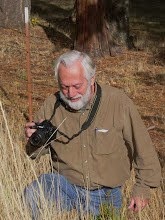
I was wandering around the FRC campus this afternoon, looking for things to photograph. I walked by the Department of Equine Studies and figured I'd better do a study. I call it "Nosy." Some nature photos more typical of my style will follow this evening. I walked a ways up a sunny, South-facing hill of mostly California Black Oak and was amazed that I actually got hot. My house, at the same elevation, but North-facing, was still frigid. Among the photos to come include some sprouts, and actual leafy greens, but nothing of the sort has appeared around my house in the 'cold spot' AKA 'pneumonia gulch.'
Wednesday, February 13, 2013
Sunday, February 10, 2013
A Day of Contrasts
Whenever I have to do errands in Reno I am torn between getting there quickly enough to have time to do all the errands and stopping for photos. If I yielded to the latter impulse, I'd never get to Reno. Highway 70, from Quincy to Hellelujah Junction is an amazing route through a transition zone from the Ponderosa Pine or Transition Zone typical of the west slope of the Sierra to the Sagebrush Dominated high desert of the Great Basin. On yesterday's drive, I resisted the photo urge until I crossed over Beckwourth Pass and descended into the Long Valley. Up until that point, I contented myself with identifying the peaks along the way and dreaming about forthcoming summer hikes. As I left Quincy, I said good-bye to the wall of peaks toward the North: Mt. Hough, Grizzly Peak, and Argentine Peak, where I do a lot of hiking and photography as soon as enough snow melts and throughout the summer and fall. After passing by Williams Loop and through Spring Garden, I was on the lookout for another set of peaks that are dear to me. On the right (to the South) is Nelson Ridge where we hiked some years ago on our backpacking trip from Johnsville to LaPorte. On the left, after rounding a certain curve near Cromberg, Mt. Tomba looms over the highway. Denuded by a forest fire some years ago, it is nevertheless intriguing as I imagine the great views possible from the top. Then there was Penman Peak on the left, and the three peaks that dominate Plumas-Eureka State Park on my right: Eureka Peak, Mt. Washington, and Mt. Elwell. Then Mills Peak on the right followed by Smith Peak on the left. These latter two are topped by fire lookouts which makes them all the more interesting to visit, that is, if you like to see humans on your mountains.
When I drive through Portola, I'm sorry to say, I don't really look at Portola. No fault of Portola's. I just can't keep my eyes off the river or Beckworth Peak. Also, despite the small town infrastructure and buildings, it is also apparent that I'm passing through an ecotone, leaving the large Ponderosa Pines of the West Slope and seeing more Sagebrush, smaller Jefferey Pines, and am nearing the edge of the Sierra Valley, a nice entryway to the Great Basin just over Beckworth Pass. Driving through Sierra Valley is a kind of challenge for one with wandering eyes. It seems the safe speed is 75, unless you want to get read-ended or feel guilty about tempting someone to pass you in an unsafe manner. Yesterday there was practically no traffic there, so I had the luxury of reviewing the peaks all around me, especially contemplating my special attachment ot Dixie Mountain, Ina Coolbrith and the distant Babbitt Peak which I visited last summer. There are many places along 70 in Sierra Valley where I like to stop, but I resisted. Lunch in Reno beckons, plus the list of errands.
When I got close to Hallelujah Junction, I couldn't resist. I had to park by the side of the road and explore the Sagebrush for a while. I loved the 360-degree panoramas. The cold, dry air was refreshing, and the silence. The incredible silence reminded me of certain caves I've explored which are so silent that it feels like my ears are reaching out to grab sound just as my eyes are reaching out to grab some light. The solitude was very relaxing. My reverie was disturbed only by my awareness that there was a barbaric coyote killing contest going on a few hours north. Ah, yes. The joy of killing. Hopefully, our species is still evolving and that vestigial trait will disappear altogether. Not in my lifetime, I'm sure.
I was enthralled by the close up look at the Sagebrush, Bitterbrush, and Rabbitbrush which collectively gave the entire scene a blue-gray look. These shrubs tend to be fairly evenly spaced as an adaptation to the lack of moisture, so it is easy to walk through Sagebrush without getting scratched. It's especially nice in winter when you don't have to worry about rattlesnakes hiding in the shade. In summer, I like to come here specifically to see rattlesnakes, but that requires an entirely different kind of careful.
My day dreaming was interrupted by my spotting a yellow-green clump of shrub some hundred yards off the road. I decided to check it out. AT first I thought it might be a dead or dying juniper. On my way there, I found a discarded political sign for the man I voted for but who lost. I was well aware that I was walking through country where his politics do not hold sway. I wondered how the sign got here. Maybe like the seeds of grass, it was carried by the wind.
Upon close inspection, the mystery plant turned out to be Ephedra. When I first discovered this plant it was introduced to me as Squaw Tea. I didn't like that name, but I didn't object. I remembered "There's no law west of the Pecos." I learned that line in college when I visited Judge Roy Bean's outpost where the Pecos joins the Rio Grande in Texas. I've since heard it called Mormon Tea, Brigham Tea, Cowboy Tea, Canyon Tea, and Whorehouse Tea. When I got home, I did some internet
research on this intriguing plant, and uncovered all sorts of facts and stories. I think I'll save my Ephedra story for another post.
Meanwhile, I was impressed how any object of a dark color or projecting above the sandy surface absorbed heat. While the air temperature hovered around freezing, the trunks of Sagebrush were warm, as were the various boards, sticks, and dark rocks strewn about. I had a hunch that this warmth might be supporting some animal activity.
Sure enough, under the first rotten board I picked up was a very active centipede.
I playing with it for a little while, took some photos, then let him go back into hiding.
I crammed a lot of thoughts and experiences into my 20-minutes visit to the Sagebrush, but had to put the camera away and head for Reno and NOISE!
I'll save my readers from any detailed description of my time in Reno. I'm a naturalist, and I didn't really see anything natural there. I was happy to be driving into the sunset a few hours later and seeing all those familiar mountains in reverse order and re-entering the zone of really big trees. We also saw lots of deer during that last 20 miles into Quincy.
Monday, February 4, 2013
A Little Winter Greenery
Feather River College is at the same elevation as my home, but the huge California Black Oaks on campus are on a south-facing hill that receives at least five or six hours of sun per day at this time of year while my front porch receives none! The snow in my front yard has solidified to ice and is still a foot thick, but the oaks I photographed today have no snow on the ground around them. So, as I visit the college each day, I love to see the greenery beginning to show. The mistletoe is an evergreen, but on a sunny day it seems greener than usual. I'd even say cheerful.
I was going to crop out the contrail in the lower left corner, but it reminded me of a quote from Henry David Thoreau. "Thank God man cannot yet fly, and lay waste to the sky as well as the earth." Looks like God let him/us down.
A variety of mosses and lichens are coming to life again at the bases of the large oaks.
The fish ponds on campus are a good place for reflection.
Friday, February 1, 2013
More Trusted than the Groundhog?
I read somewhere in the past 24 hours that Punxsatawney Phil is only accurate 36% of the time when it comes to predicting an early spring vs. a much longer winter, and that's similar to the record of sources like Farmer's Almanac and TV meteorologists. In other words flipping a coin would work better.
Since tomorrow is Groundhog Day, I thought I'd offer an alternative forecast. Last night our indoor cat was continually jumping up to around the 4 foot level against the window on our back door. It turns out he had spied a moth on the outside of the glass It was around 25 degrees Fahrenheit outside, so I wondered where the moth got sufficient warmth to be fluttering around out there. Probably was nestled against the house somewhere and picking up heat that leaks through the walls. On the other hand, maybe this moth "knew" something we don't, namely that Spring is about to spring. I like to think so.
At any rate, I couldn't get a photo under these conditions, so I'm plugging in a photo of a colorful moth I got last summer at Oakland Camp. It's the Eyed Sphinx. I like sharing color at this time of year. Call it the 'audacity of hope.' The one on our back door window was plain brown, and might have been a skipper.
Thursday, January 31, 2013
I'm Not in London!
I'm still in Quincy. My driveway is still icy. I'm looking forward to summer. And, I've never been to London. My email contacts know what I'm talking about.
Meanwhile, I saw some great Ravens close up today, but didn't have my camera. Their beaks are very impressive. I got within 10 feet of one, and it was quite fascinating to watch him continue to eat on the lawn but constantly give me sideways glances, ready to take flight if I tried anything funny.
Friday, January 25, 2013
Opportunity and Opportunism
I'm posting the photos first in order to reserve this space and jog my memory for a narrative that will follow. Maybe it's the warmer weather, or maybe it's just a collision of my various sources of recent reading, but I'm finding (or imagining?) connections that I will try to explain later. First, there's a disturbing (to me) piece in today's New York Times titled "American Evangelicals fuel Uganda's anti-L.G.B.T. crusade." Then there's an article in Cornell Ornithology Lab's newsletter titled "The Bold and the Bashfull." Finally, my early a.m. photos of a raven (actually, there were 3, but only one stayed). These items have caused me to explore the idea of "opportunism" both in nature and in human society, which, more and more, I'm beginning to see as one. Stay tuned. Maybe look up some of these items then enter the dialogue.
Sat. evening followup: The bird study mentioned above involved placing identical feeders in two different settings, one out in the open and the other more sheltered. It turns out some of the birds (same species) were risk takers and chose the feeder out in the open and tended to be aggressive in their pursuit of food. They were more likely to be caught by predators, but, until that happened, they tended to be better fed. The "bashful" birds tended to choose the feeder under cover. They were 'safer' but were more likely to go hungry. So, the three Ravens in my 'study' probably consisted of one bold and two bashful. I have to resist the temptation to extrapolate this study to humans.
The NYT article and accompanying video were unnerving. The evangelicals in supporting an atmosphere that was already extremely hostile to homosexuality spoke in the same language of Hitler's earliest followers, that is, the language of intending to take over the world! The language of smug self-righteousness. I'm being redundant. Very large amounts of money from across the USA were targeting Uganda and other African countries as being ripe for the spread of their particular brand of Christianity. Too many fanatics on the loose! Not good for the future.
My last comments have to do with opportunism. Certain animals seem to be flexible enough in their habits that they can adapt to a wide variety of conditions under pressure. Ravens, for example, and pigeons and rats seem to be able to eat most anything when they choose to live in close association with humans. I'm used to calling them opportunistic. When I looked up the word, nearly every source gave it very bad connotations, essentially meaning 'taking advantage of unexpected opportunities without regard for the effects on others." In other words, selfishness. I've read a lot about the presence of altruism in humans and other animals. I doubt that invertebrates can have a philosophy of altruism, but there are many examples of animal behavior in which individuals and groups sacrifice their own interests for the sake of the survival of the species.
This has been a rather loose statement in response to some ideas that collided in my brain on a warm, foggy morning. Some of the issues are definitely worth further exploration and careful expression. I'm working on it.
Thursday, January 24, 2013
Sensitivity Genes?
Evidently, the frogs, among other critters, are pretty fine-tuned to temperature change.
After a long spell of single digit morning temperatures (that's Fahrenheit!), we had a warmer day today. It didn't freeze last night, and it rained a bit. The Pacific Coast Chorus Frog, among other critters, was apparently sensitive to the change. I parked in the lower parking lot of the FRC campus this morning, and, as I walked up the hill, I was struck by the large numbers of these little frogs chirping. They were all in their mottled brown phase, so they were very difficult to spot. There were also many Juncos and Ravens about, even though I had hardly seen any birds over the past couple of weeks. I didn't see or hear any Bullfrogs, so I assume the ones living in the fish hatchery ponds are still buried in the mud at the bottom, or at least are not so easily tempted to enjoy a brief warm spell.
For comparison, I'm posting a couple of summer photos of the same species of frog showing its green phase. This frog occurs up and down the Pacific Coast and has amazing color variations. Some taxonomists split it into three or more species. The top two photos were taken in my front yard in Quincy and the bottom one was taken behind my previous home in Leggett (Coastal Range).
When I first moved to California it was still known as the Pacific Coast Tree Frog and had the scientific name Hyla regilla. Due to some new genetic testing technology, it was found to be more akin to the East Coast Chorus Frogs and is now, in most manuals, known as the Pacific Coast Chorus Frog and scientifically as Pseudacris regilla. This brief morning episode has given me 'delusions of spring.' I'm sure it won't last.
Subscribe to:
Posts (Atom)


